Humble Beginnings
Van Eaton Cabin and Japanese Tofu House
There were a few early settlers already living in the area in 1889 when Thomas Cobb (T.C.) Van Eaton was led to this site by Soo-Too-Lick, also known as Indian Henry, a capable guide and friend to many newcomers. Van Eaton's goal was to start a town. His first cabin home, built the year he arrived, was multipurpose, also serving as a post office, a trading post, a stage stop for travelers passing through, as well as an “incubator” for new businesses until they were ready to expand.
In 1903, the Tacoma Eastern Railroad arrived, followed by a huge sawmill, built in 1907.
The mill, operated by Eatonville Lumber Company, along with the railroad, helped take Eatonville from a small settlement community into a booming lumber town and tourist destination on the road to Mt. Rainier.
As the mill expanded, hiring opened up to a larger pool of mill workers. Japanese American citizens made up a significant portion of the crew, some even working as farm hands at the mill dairy. They lived in company housing behind the mill and their children attended Eatonville schools.
The small white building was known as the Tofu House and was relocated to this site for preservation. It was the center of the Japanese mill community and provided a place to prepare tofu.. Unfortunately, a few months after the December 7, 1941 attack on Pearl Harbor by Imperial Japan, these families were part of the 120,000 West Coast Japanese forced to move to internment camps built further inland. Their removal was swift and shocking for the families, who had only a couple days to prepare.
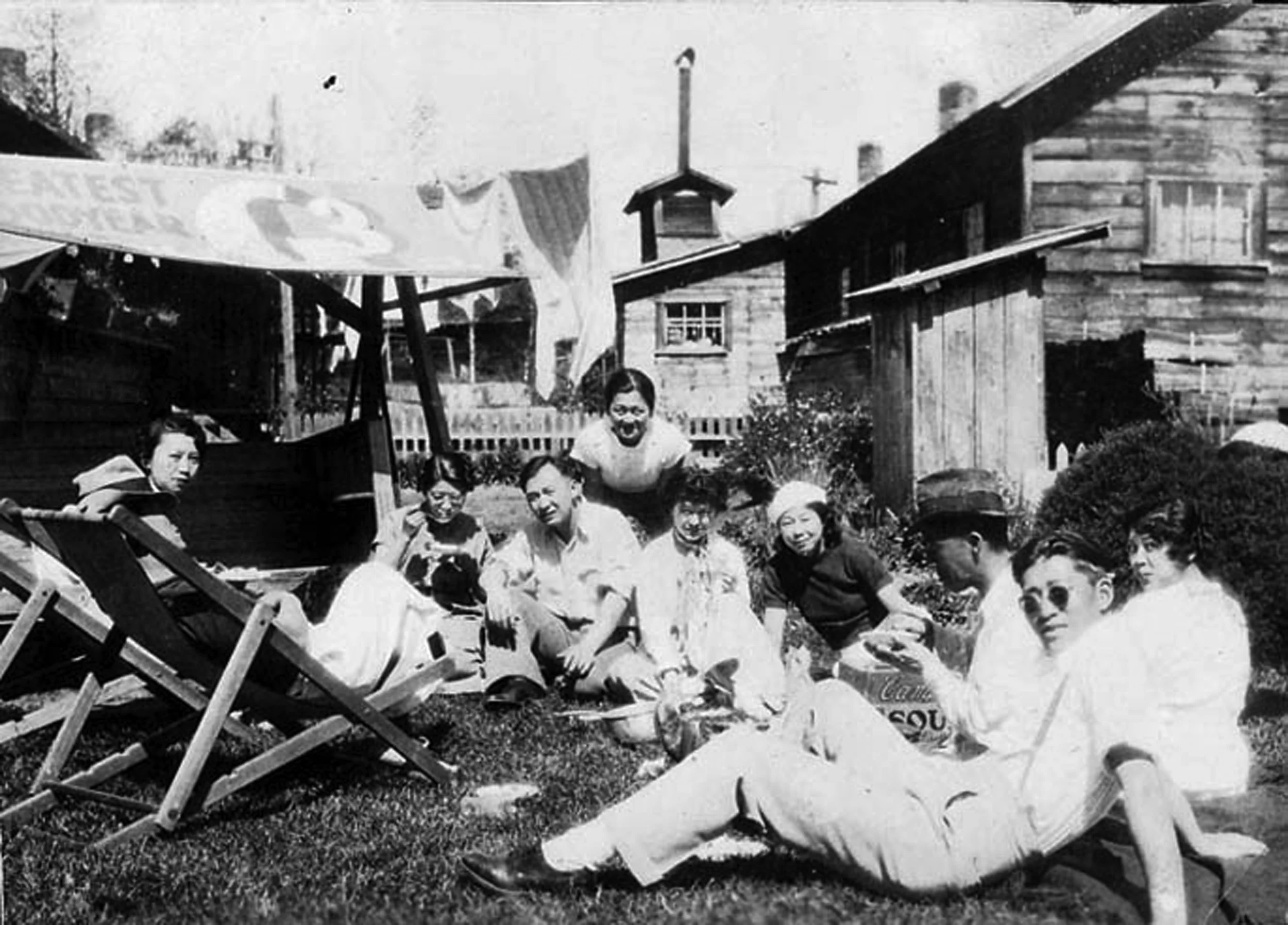
Family and friends of the Sakura family gather for a picnic on a sunny afternoon amongst the company houses, c. 1939

Federal Order for Japanese Americans to Evacuate the West Coast
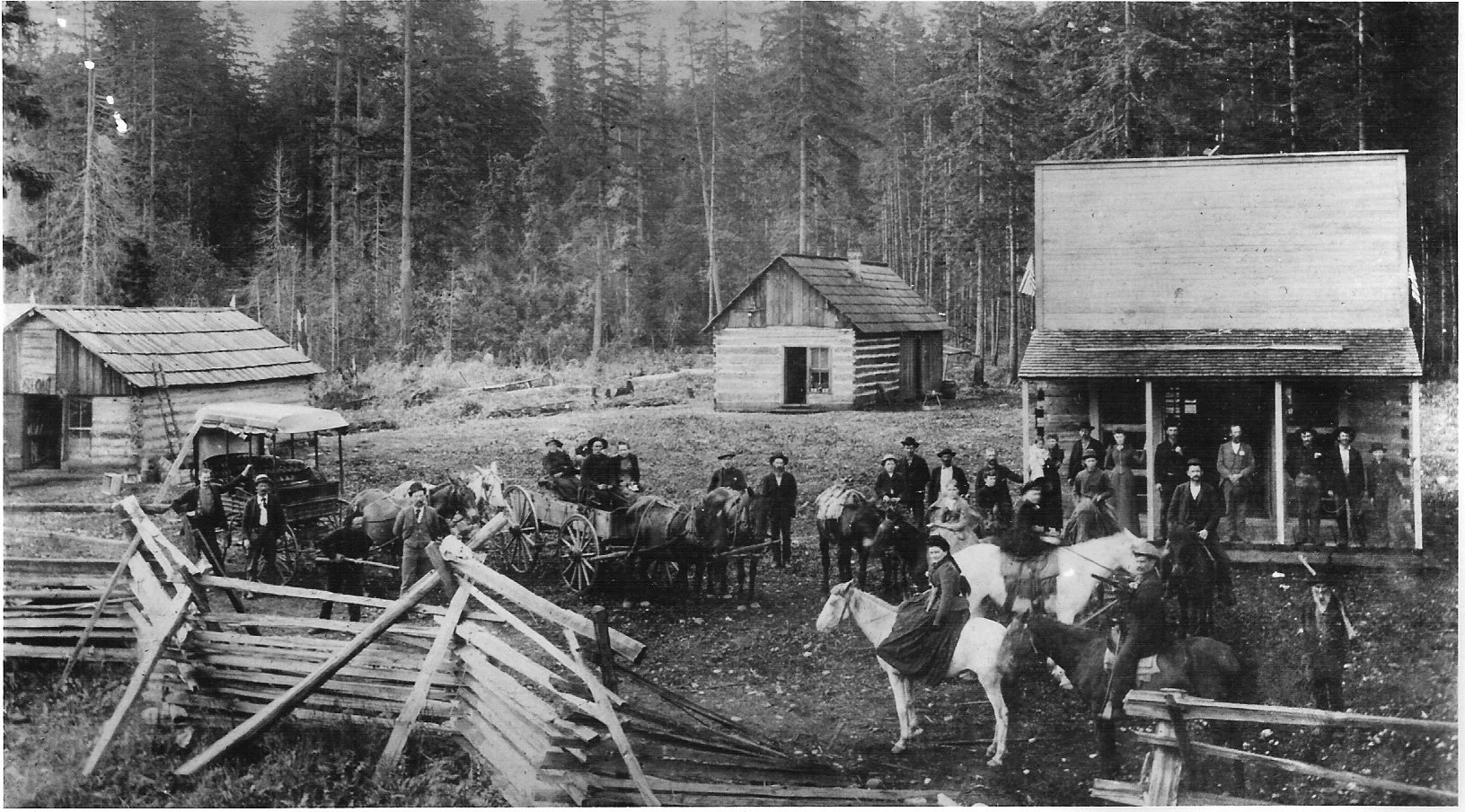
Van Eaton cabin on far right, c. 1890s
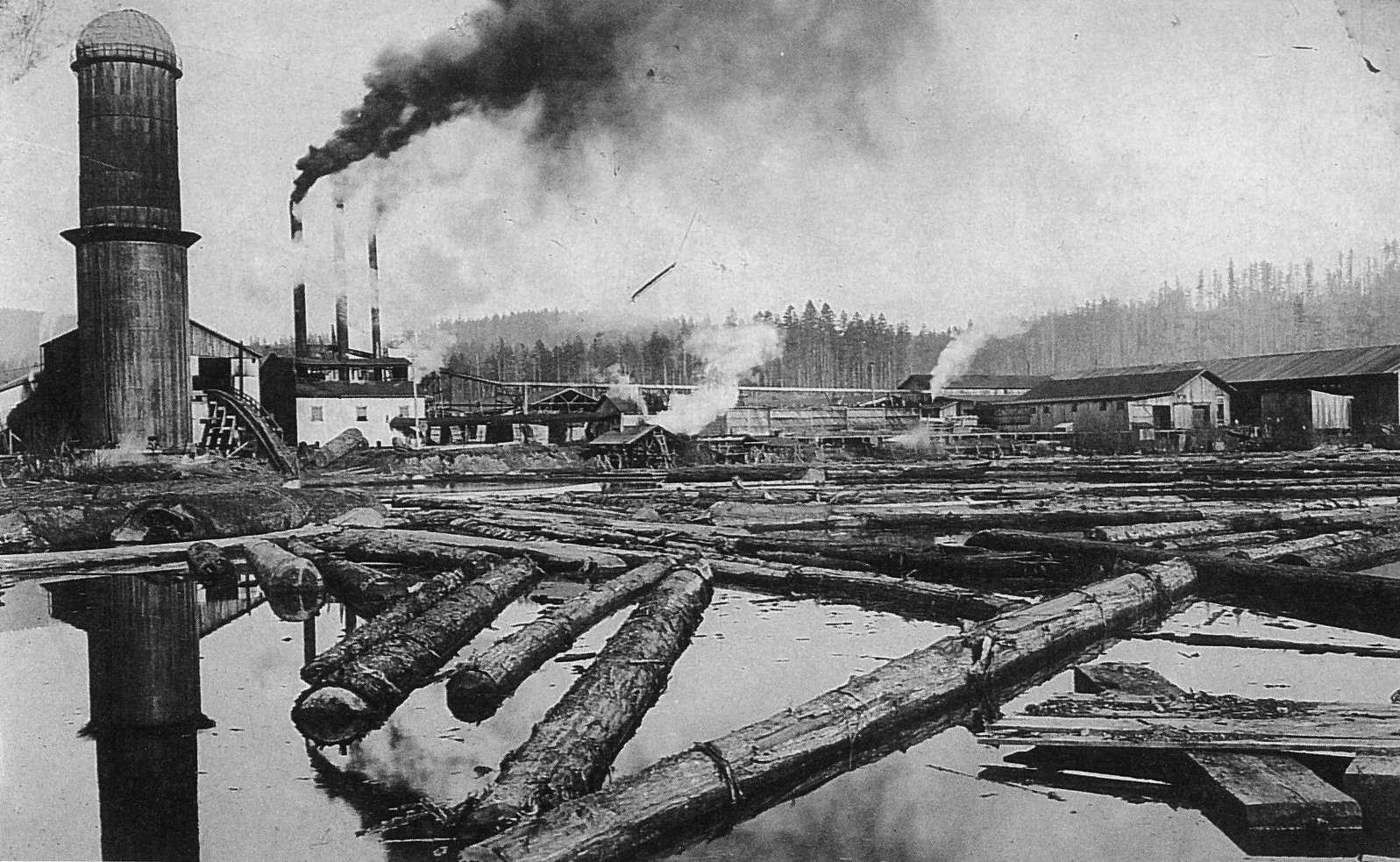
Eatonville Lumber Company mill,
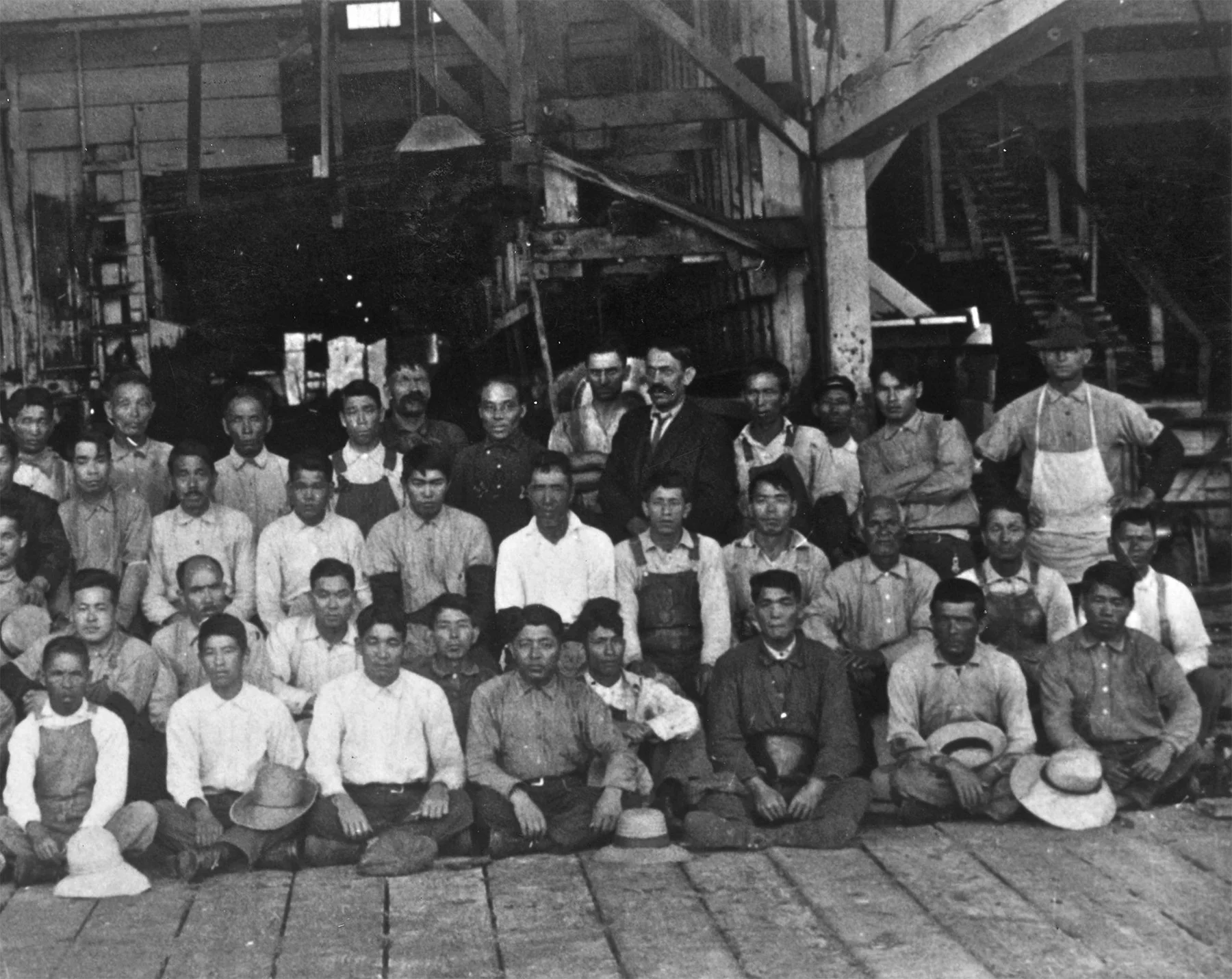
Japanese mill workers, c. 1920s